
Keeping a Dinoster alive on a real floor — Quantum Heroes Dinoster transforming dinosaur robot toys
Joints, panels, lost parts and the two mistakes that break a transforming robot. From the Quantum Heroes Dinoster log of transforming dinosaur robot toys.
Force is the only real enemy
A transforming robot does not break from use. It breaks from being folded against its hinge, almost always by an adult who is trying to help and has not watched the sequence once.
Every model on this site runs a fixed order of steps. If a panel will not move, something earlier in the order is still closed. The fix is to go back a step, not to push harder.
Our joints are polished ABS and they are meant to be tight out of the box. Tight is correct. A joint that moves freely on day one will not hold a pose by month three.
Nothing here needs a battery
None of these robots take batteries, including the crew figures with light and sound. That removes the single most common reason a toy goes quiet in a cupboard.
It also means there is no battery door to lose, no corrosion and no reason to open the body at all. If something rattles, it is a loose part inside a limb, not a cell.
Washing is a damp cloth and nothing else. Submerging a Dinoster traps water in the joints and the joints are the whole value of the toy.
Packs, parts and what does not combine
Robots that arrive in the same box still convert separately. Parts are not interchangeable between models unless the box says they are, so a limb from one robot will not help another.
That is worth saying to a child early. Mixing parts between two Dinosters is how a shelf ends up with two broken robots instead of one working pair.
If a small accessory does go missing, the robot still runs its full mode sequence — none of the modes on this site depend on a removable part.
The story a Dinoster on a real floor was drawn for
Quantum Heroes Dinoster is animation first: FunnyFlux Entertainment made the original series in South Korea, Alpha Group took it into China, and the Educational Dinoster System stands in the production credits. A Dinoster on a real floor is a piece of that original design, carried from animation into plastic proportions intact.
What the team does on Dino-Earth
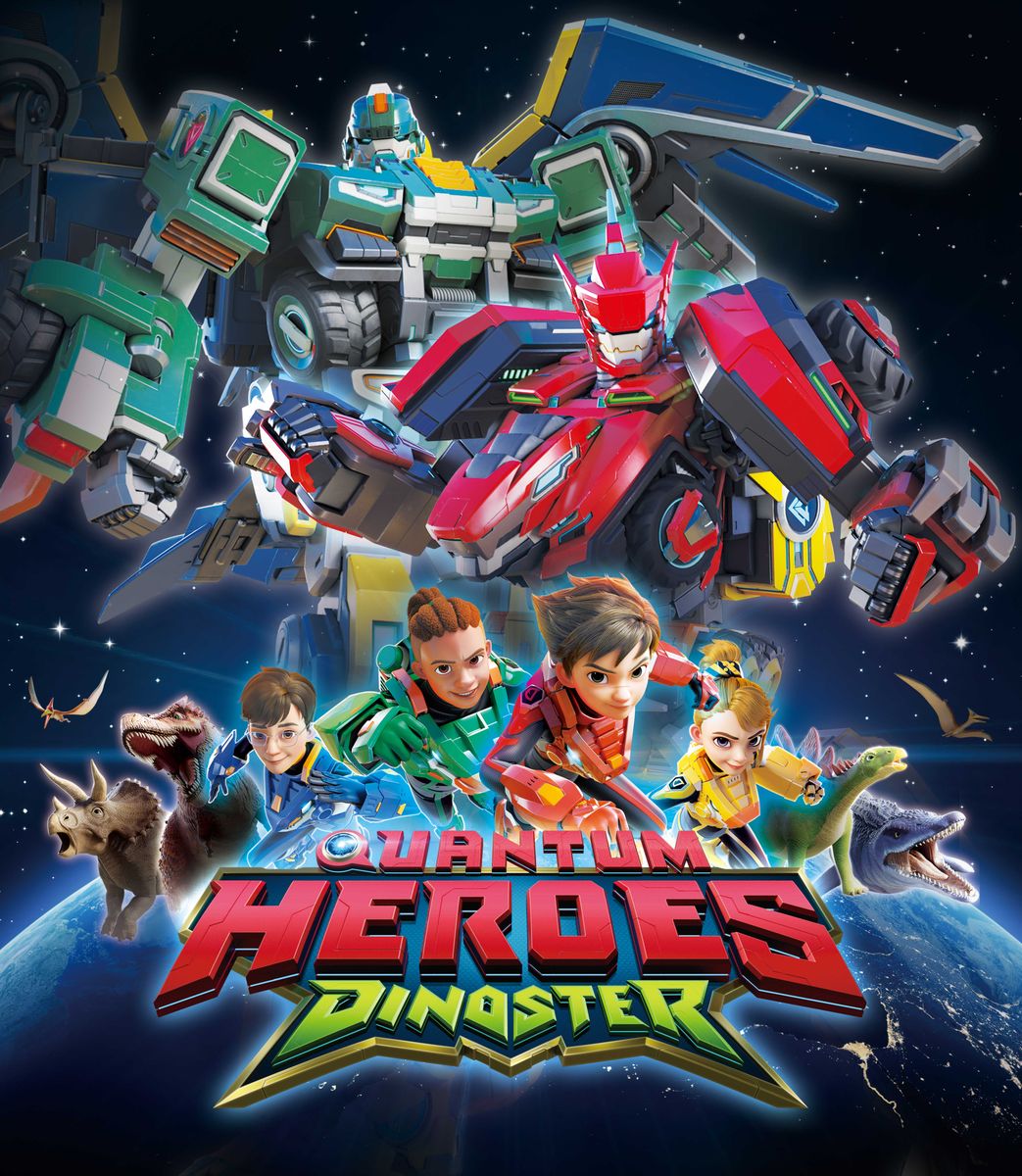
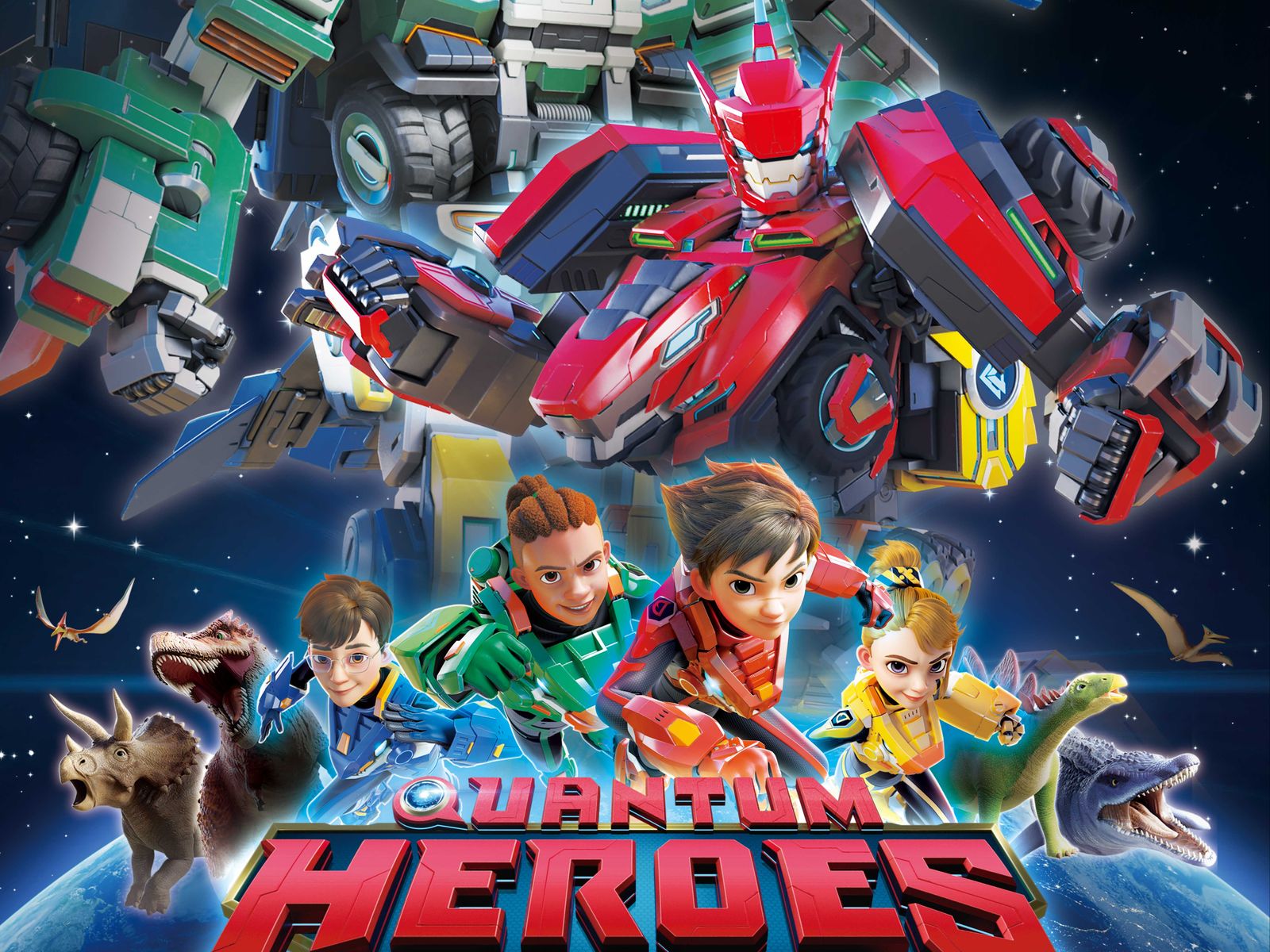
Four kids, one parallel Earth. On Dino-Earth the dinosaurs never went extinct, the kids travel across through a quantum gate, and the job is to protect living animals from an extinction history already handed them.
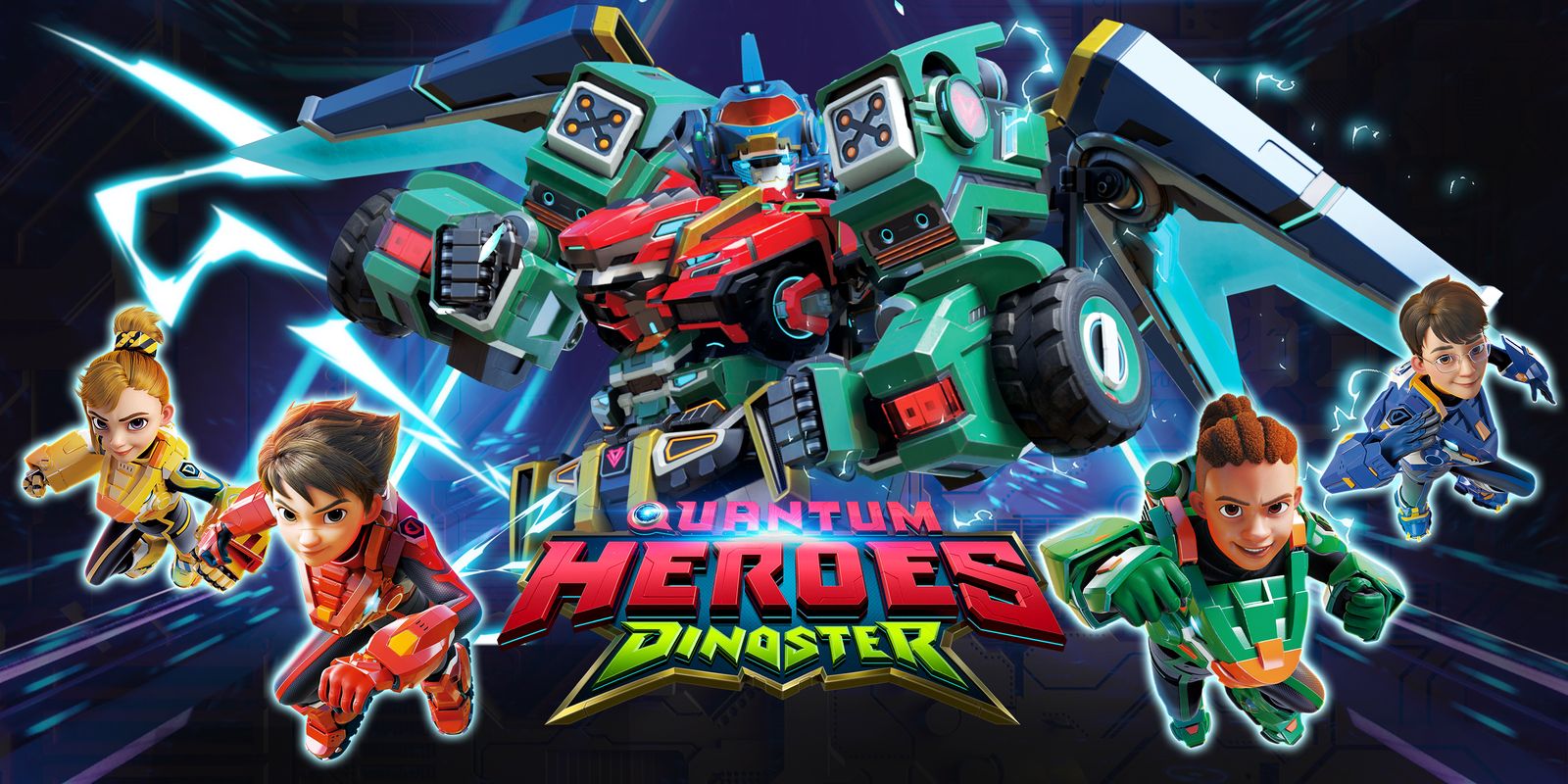
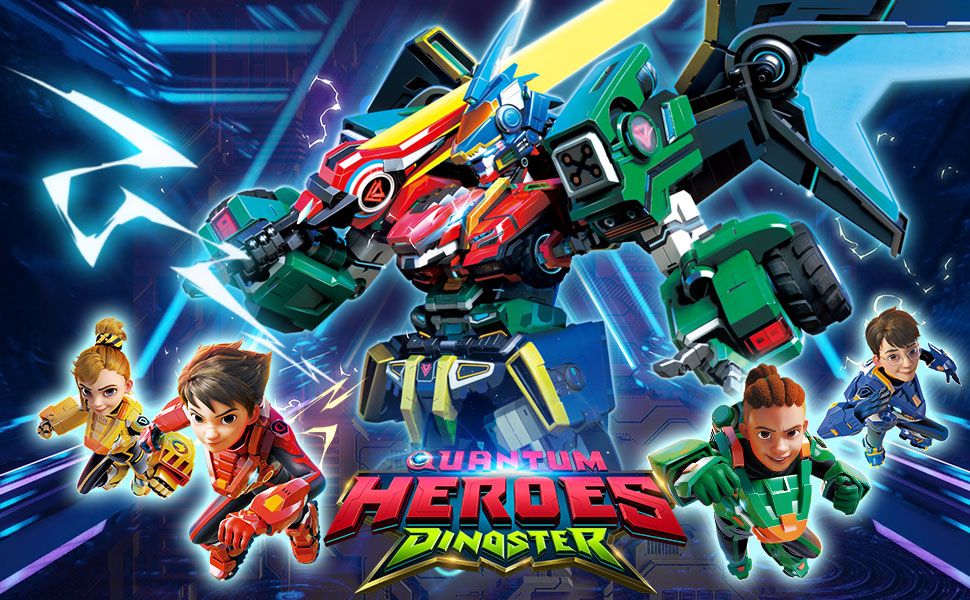
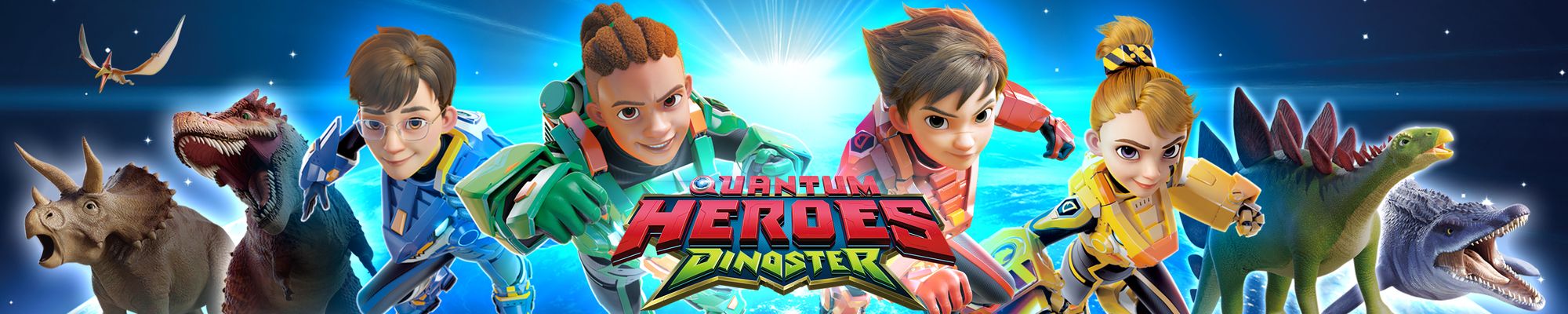
The crew is Lucio, Oz, Delby and Jay Min, and each of the four kids is locked to one Dinoster:
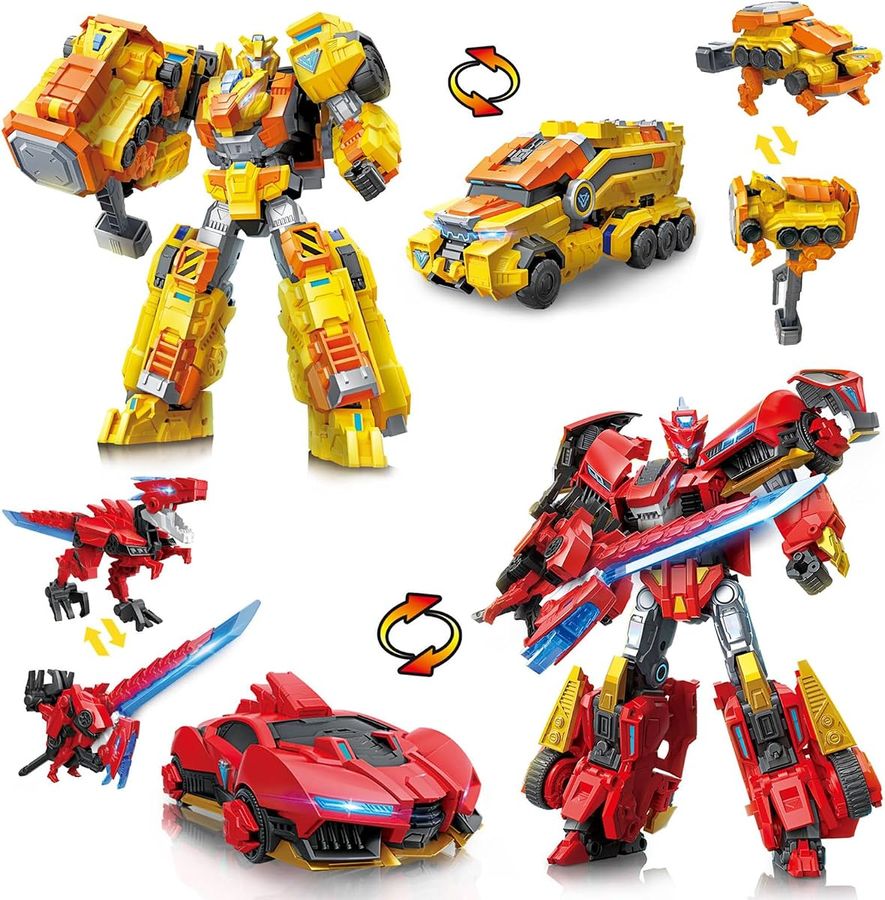
- Lucio — Raptor Dinoster, red suit
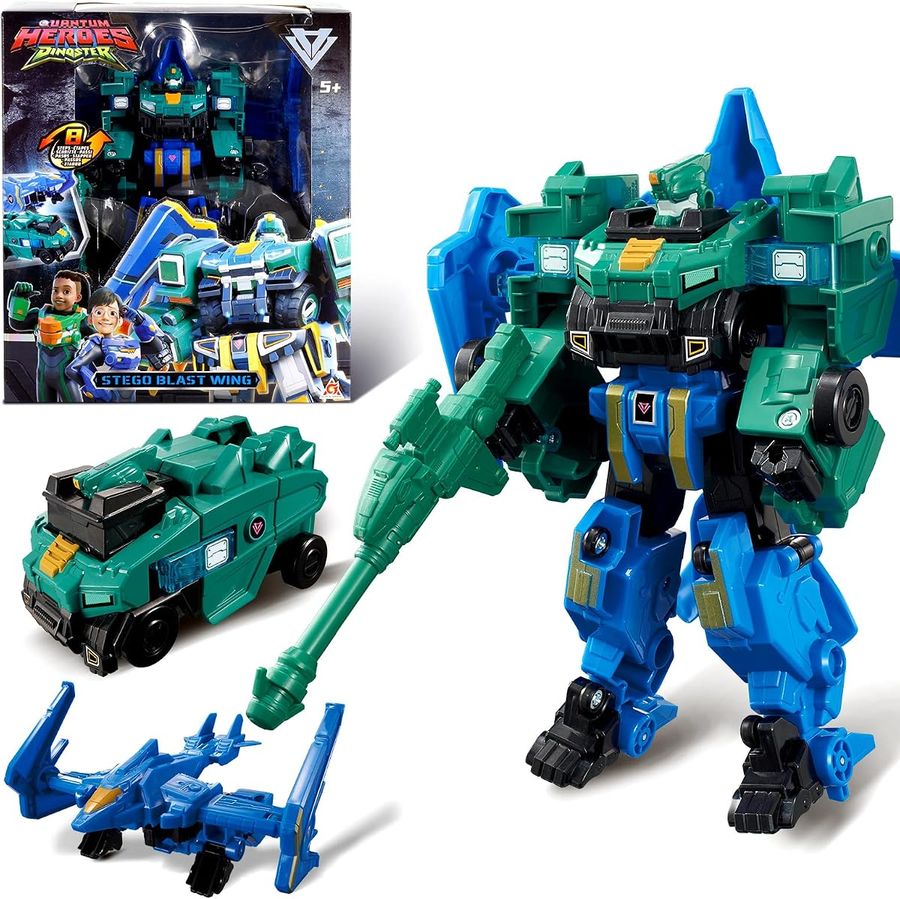
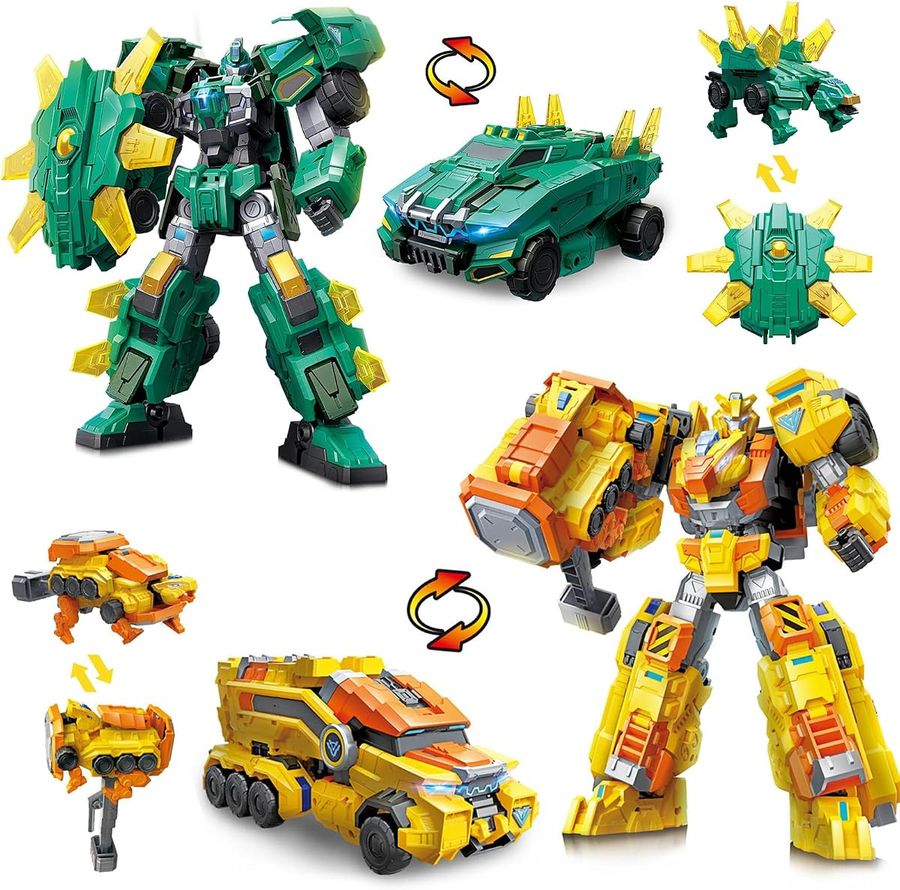
- Oz — Stego Dinoster, green suit
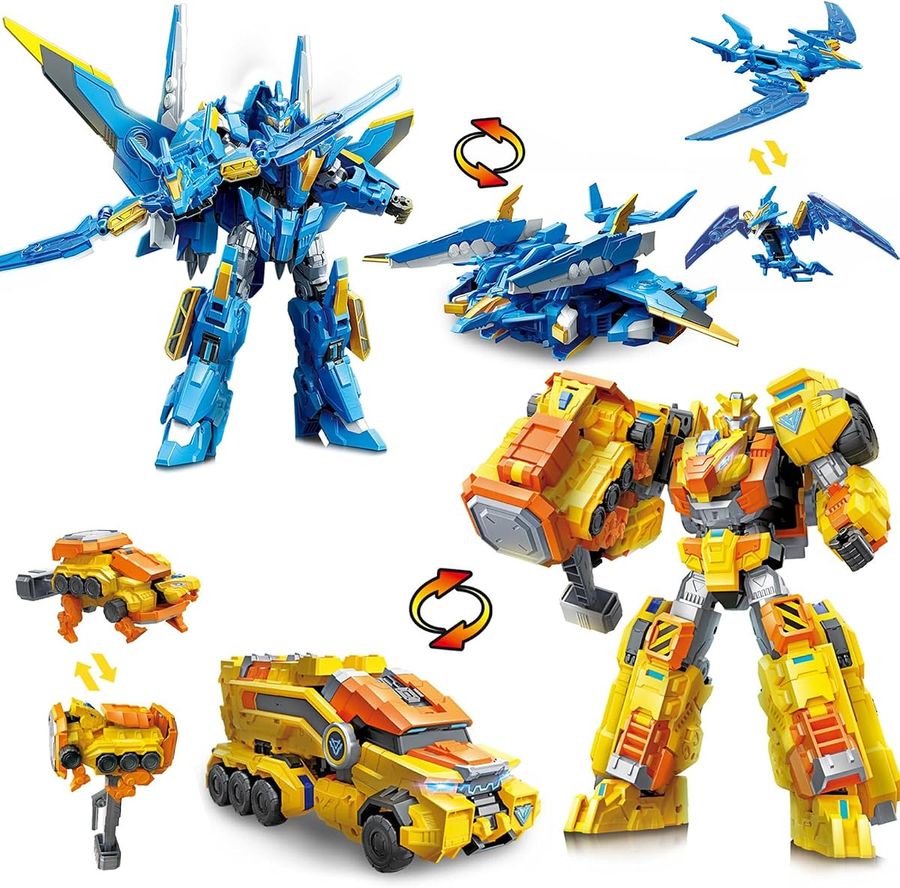
- Delby — Ankylo Dinoster, yellow suit
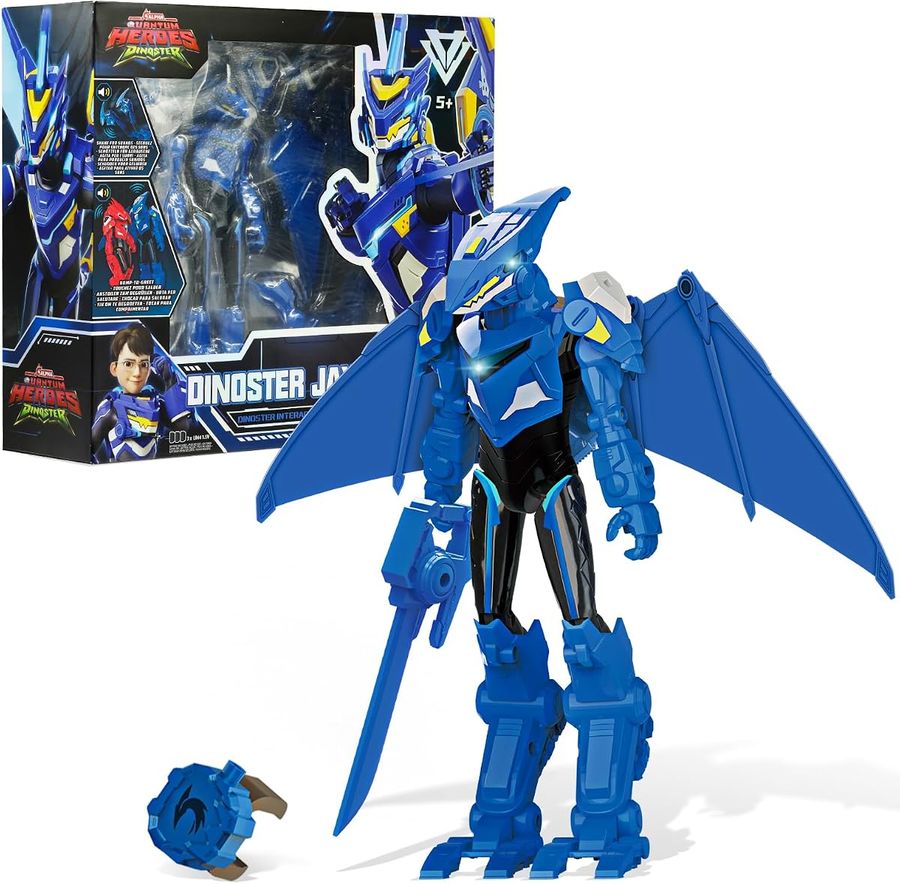
- Jay Min — Ptera Dinoster, blue suit
Professor Laura leads the mission and decides which danger is worth the travel, hi-tech quantum suits keep the team alive, and transforming vehicles get them to the dinosaurs in time.
The villain on the other side
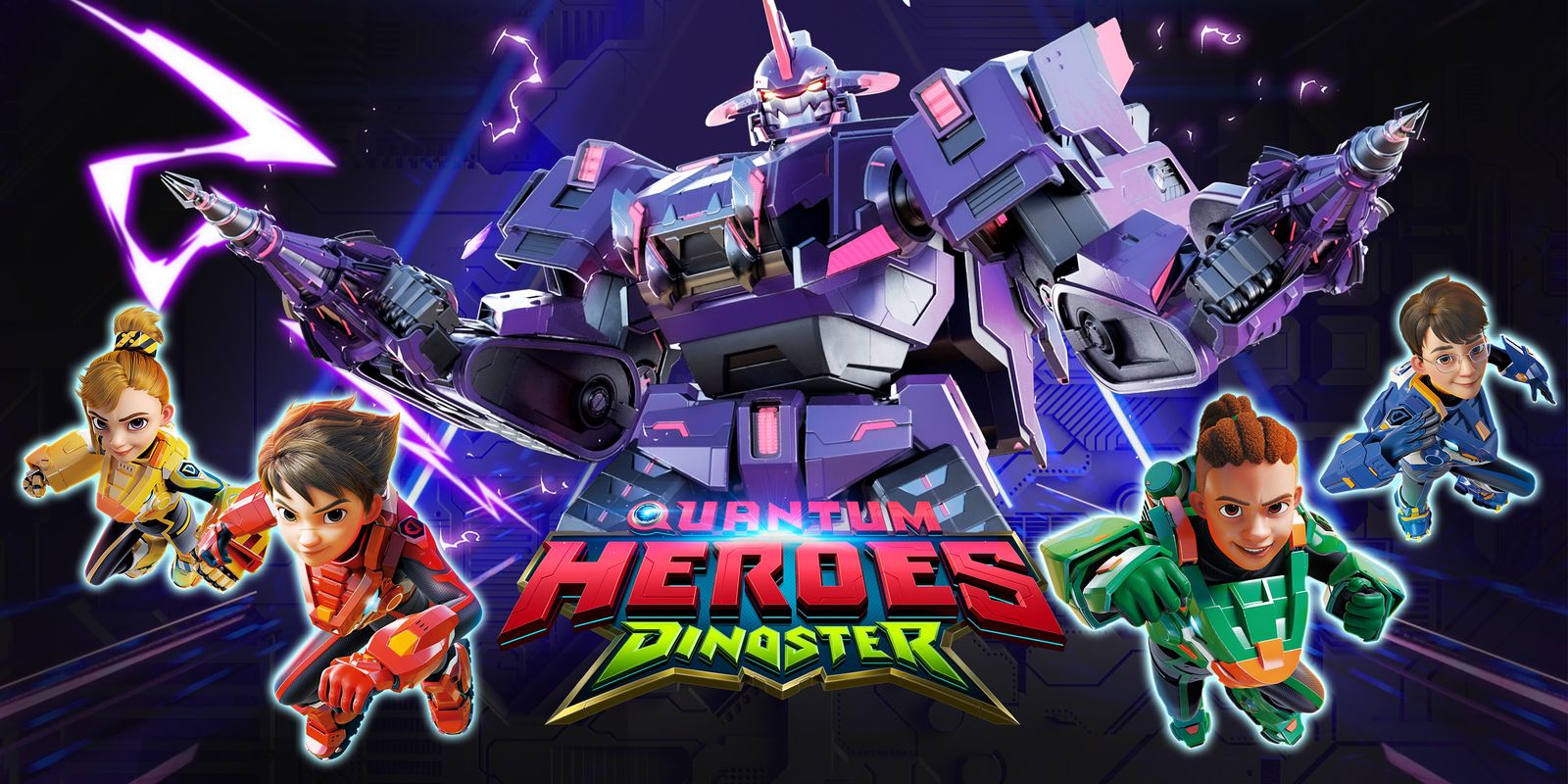
Every season the same villain returns. Bex Hunter turns captured dinosaurs into cybernetic Armorsaurs and means to save neither Earth from the result. The mighty builds in this line exist because of him. A Dinoster on a real floor is one of them, and joining the rescue — taking the animal back, saving it, getting out — is all of it.
Episodes where the fleet line shows up
Three seasons, seventy-eight episodes, eleven minutes apiece — one episode before the bath, one after. If a child wants to see what a Dinoster on a real floor does, the fleet episodes are these:
- Welcome to Dino Earth Part 1
- Dino-Sitting: The Toughest Mission of All
- The Final Showdown! Dinoster vs. Bex Hunter
- The Digital Dino Battle!
- The Teleporting Carnotaurus
- One Troublemaking Pterosaur Egg
From Welcome to Dino Earth to the showdown
The first season is called Welcome to Dino Earth, the Super Dino Suit comes in season two, and somewhere in between a Carnotaurus teleports out of a school corridor. What the series does best is domestic: a baby raptor rescue, an egg that hatches early, a dino dentist, a living fossil, a magnetic Mononykus and a giant Iguanadon migration.
The animals on the other side of the gate
What makes the line easy to explain is that the dinosaurs are real ones. A Triceratops is a Triceratops, a Brachiosaurus is a giant, and the T-Rex is the one the villain comes back for. Part of what the series has put on screen:
- Woolly Mammoth
- Apatosaurus
- Baryonyx
- Pachycephalosaurus
- Plesiosaurus
- Carnotaurus
- Quetzalcoatlus
- Brachiosaurus
What the team actually does with an animal
What a child learns from an episode is small and real: the team studies the animal, keeping the danger away long enough to understand it. The English dub keeps the names the original used, so the thing called a Triceratops is the same Triceratops in every country, and saving it is a mighty result for one short episode. The series is not shy about its hooks: one mission is built around a magnetic Mononykus, another around a troublemaking pterosaur egg that refuses to sit still.
Where the series itself lives
It has been dubbed for more than one country, but the English run for the United States — live since 28 August 2023, a season after South Korea — is the one children here quote. Nothing here needs the series to make sense, but a Dinoster on a real floor is far easier to explain after eleven minutes of it.
Quantum Heroes Dinoster transforming dinosaur robot toys, by mode count
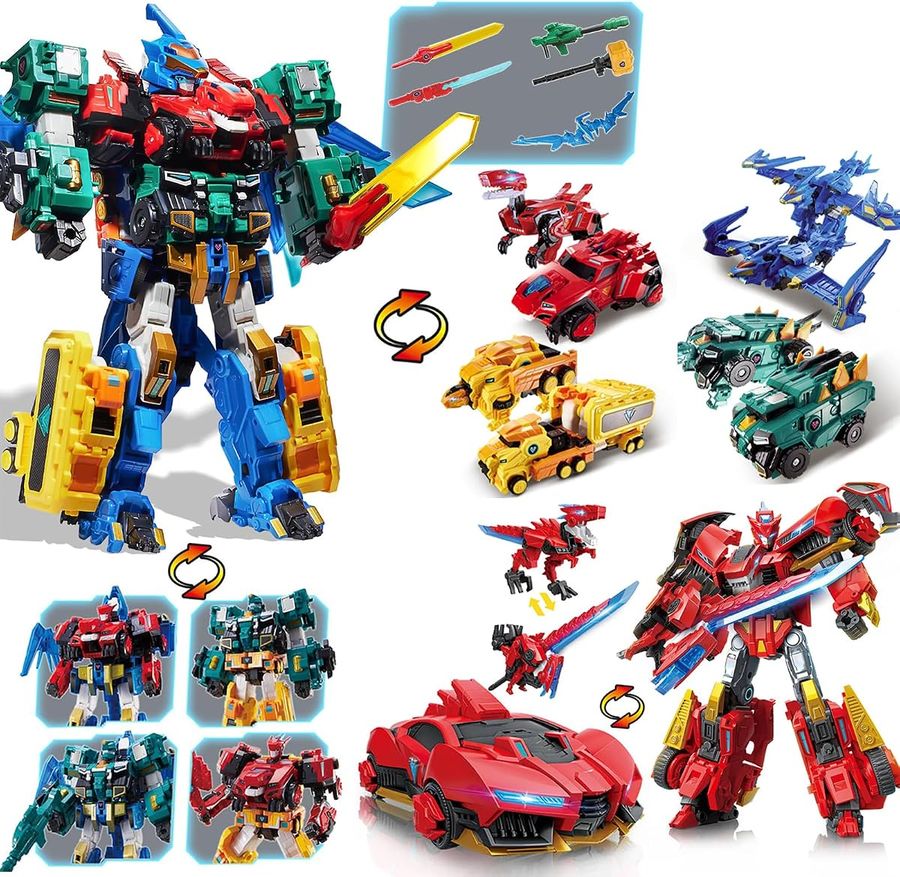
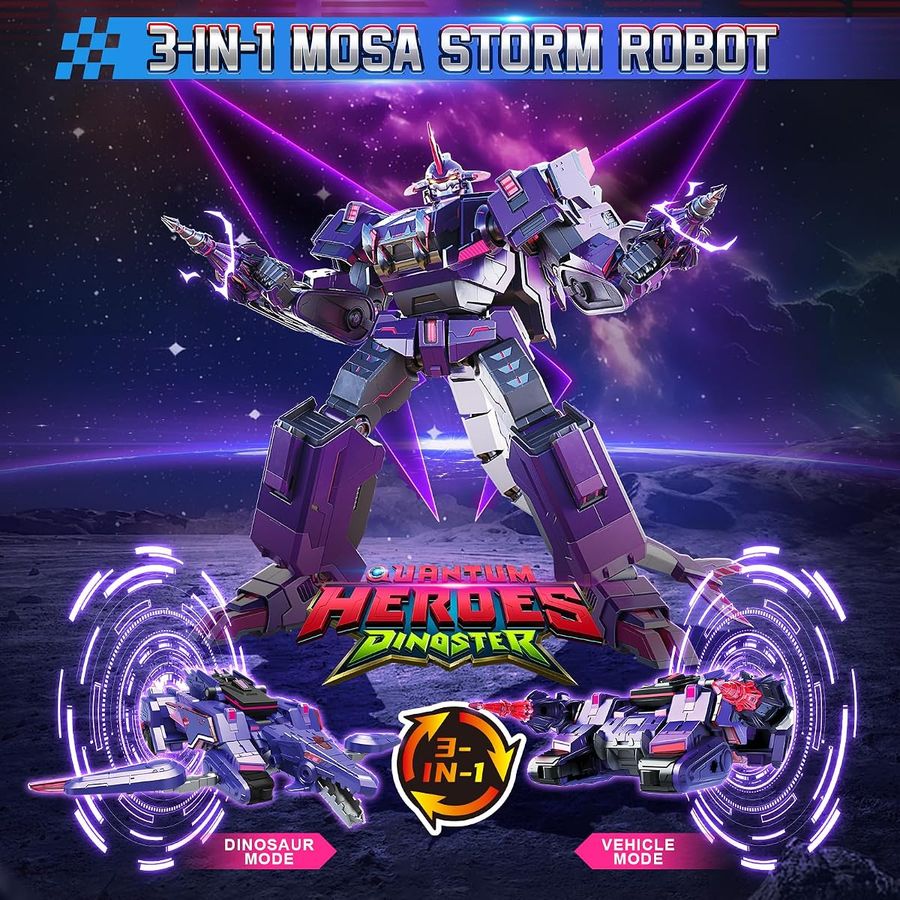
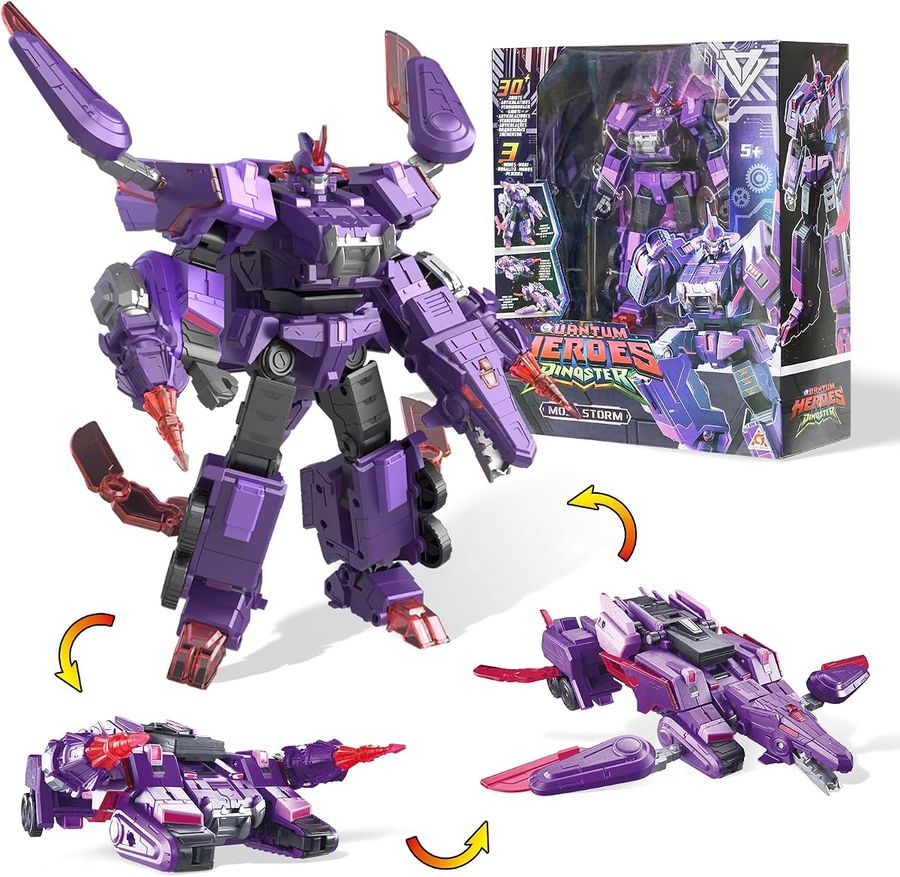
Pick by how much folding, not how much plastic. A two-mode robot is run from memory within days; three modes make the child choose a shape; the four-mode build is a set of vehicles that happens to assemble.
Where Quantum Heroes Dinoster sits on a toy shelf
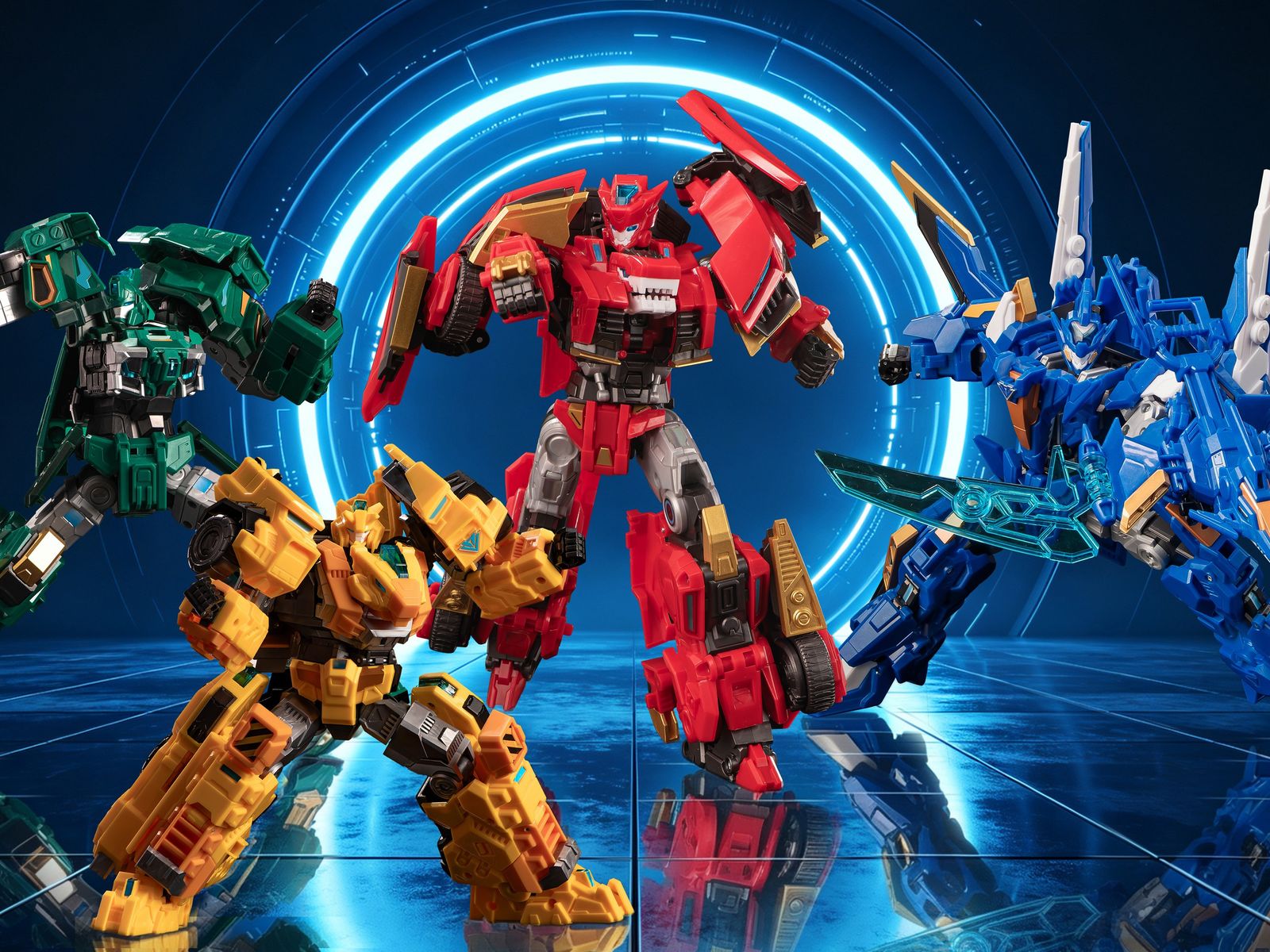
The line is simple to describe: transforming dinosaur robot toys taken from a series about four kids, a professor and a parallel Earth full of dinosaurs. Sizes run from five to sixteen inches, the material is moulded ABS, and batteries are not part of it.